
There is evidence to suggest that more intelligent, empathic children grow up to be vegetarian.
You or I might see a delicious meatsplosion. A vegetarian dismisses the evidence of eyes and nose. Looks at ‘hamburger’ but sees associations. Negative ones. That’s not beef. It’s climate change. It’s environmental degradation. Appalling cruelty, nitrate-spewing antibiotic resistance engendering wrongness. The vegetarian is able to look at the hamburger with the full engagement of the prefrontal cortex. The rest of us, reptile brains hissing, inhale the aroma and salivate. Like Pavlov’s dogs.
This ability, to make associations, is not uniquely human. Hence Pavlov’s dogs. But the ability to make associations in the context of an unrealised future (climate change!) is. And it might be a key component of empathy.
This is probably important for UX. Designing a User Experience that is rewarding demands some understanding of the user. More empathic designers might well be better at anticipating user desires. Right?
Shall we define empathy, before we go on? We shall. “The ability to understand and share the feelings of another”, as the Oxford English Dictionary has it.
We might interpret the results of the study in this way:
- If your ability to feel the pain of the cow outweighs the pain of your hunger, you’re more empathetic
- More vegetarians feel this way than omnivores
- Vegetarians are more empathetic than omnivores
A slice of cheese; some bacon
But is this all there is to ‘understanding’ the feelings of another? The vegetarian sees the hamburger and associates cow. And pain. And this affects action. But the omnivore doesn’t necessarily just see a lump of chargrilled deliciousness.
Not just that.
Just because the omnivore’s associations don’t stop the munching, doesn’t mean the hamburger is just food. Those associations might actually drive the omnivore to the diner in the same way they drive the veggie away.
Sitting on Pop’s lap. In that big old Buick. Family memories. Childhood. Slurping an ice cream milkshake in a simpler age, when there weren’t all these scrawny, pale, self-righteous do-gooders telling you that you’re wrong to want it triple stacked and bacon garnished and the anticipation of that plate set on the countertop in front of you and Pop turning your cap around backwards before you started to eat. Weren’t you happier then? Before the stress of adult life kicked in? They already came for your present, now they want to tear up your past too?
Do you want to tell the omnivore his associations are all wrong? That he hadn’t just hit his first home run that morning? That Pop was, for making a steaming stack of grill-crisped meat feel like a reward for all that sweat, wrong?
What kind of empathetic person would say that? What kind of empathetic person would go after someone’s rose-tinted childhood memories of parental bonding?
The challenge for the UX designer then might be: How can I connect with the user. And how can I be sure that the symbols I drop carry the associations I want the user to feel. And can I ever use symbols and expect them to help me connect with everyone.
The meat of it
UX design is not branding. Brands will identify an ideal customer and shape a brand personality that will resonate. If, for example, Nike’s high energy, innovative, action-focused persona doesn’t resonate with everyone, so be it. Those that do relate to the persona can define themselves by it, and how they relate to others for whom it doesn’t. That’s how loyal brand tribes are made.
And yet, UX is fundamentally connected with brand. When designing UX for a particular brand, is it possible, or desirable, to differentiate the UX according to the brand persona?
Might there be situations where the UX design demands will differ where similar brands have very different personas?
And if this is so, UX should concern itself with both the brand persona and promise, and how that translates to understanding the consumer of this brand in particular.
Scientists break empathy down further. We have cognitive empathy: The ability to recognise and understand another’s mental state. And affective empathy: The ability to share another’s feelings without direct emotional stimulation.
Cognitive empathy is an element of theory of mind. The ability to appreciate that another person doesn’t see the world exactly as I do. And it can be developed over time. We know this because we’ve all played peek a boo with babies. The game gets boring when you realise that covering your eyes doesn’t, in fact, make you invisible.
A little more affective empathy and a boost to our cognitive empathy should make us better understand users. And through this, make us better UX professionals.
Right?
Green salad
Some theorists believe that certain colours evoke a universal response. It’s reasonable to suggest, for example, that green carries positive associations that pre-date the evolution of the pre-frontal cortex. Our distant ancestors may well have responded to green, verdant areas more positively than brown or grey ones. From a practical perspective, the fact that we associate green with provident nature might give green an advantage over other colours in all situations.
But that might not be true.
Is green a sure choice for a product with a ‘natural’ persona?
Well, not all shades of green say natural.
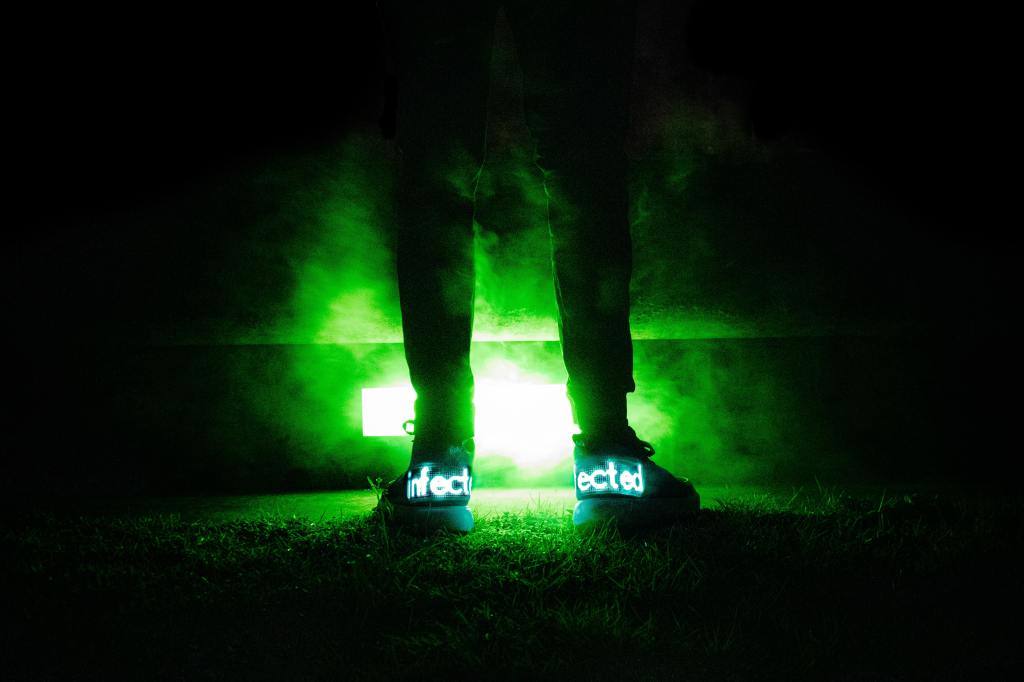
See? Photo credit: Sebastiann Stam, Unsplash.
And it’s likely that woodland green wouldn’t support a brand persona driven by cutting-edge tech. At a minimum, UX should support the brand by speaking to the user in a way that is consistent with the brand persona.
We can get better at this by getting better at understanding people.
Pickles?
Some of the most frightening studies in psychology describe the long-term effect of a lack of human connection in early development. There is conjecture that suggests the Unabomber, Ted Kaczynski, was affected by being isolated from his parents as a young child due to illness. In both cases, there is a troubling link between early isolation, a lack of empathy, and an inability to relate to other humans. And perhaps it is this disconnect – between my experience of the world and yours – that leads to a lack of empathy.
Anecdotally, this might also be true on a mundane level. In discussing envy, the philosopher Alain de Botton points out that it’s almost impossible to envy the Queen of England. While she may be rich, famous and powerful, the circumstances of her life are just too strange for us to imagine. Where I can’t imagine myself in someone else’s circumstances, it seems I can’t envy them. And likely I can’t empathise with them either, except in specific universal circumstances.
This might be the reason that royal weddings and funerals, or new babies, tend to coincide with brief increases in support for the monarchy. We may not all have occasion to wear a crown, or shake hands with dozens of curtseying people, or speak in a funny accent. We all get married, have babies and die.
A second patty
Yet there are some professions that demand practitioners empathise with their customers. And this empathy is absolutely vital to the role, regardless of how different one’s life circumstances might be from another’s. I’m talking about FBI hostage negotiators. In his book ‘Never Split the Difference’, Chris Voss talks about using ‘tactical empathy’ to connect with people that you might not necessarily like or relate to. Like terrorists.
The key is to listen, without judgment. Really listen. And after listening not to claim you understand them. Rather, to ask if ‘we’ can agree that certain things are the case. And to move to common ground from there. In this way, Voss believes that developing empathy will lead us to a place of mutual understanding and agreement.
In 1997, Elaine Aron and her fellow researchers developed a series of questions to quickly establish empathy between people. These could be used to establish rapport between people who might enter a dialogue with a negative impression of their peer. For example, people of opposing political persuasions. The questions became famous in 2015 after reports of study subjects (necessarily strangers) falling in love.
Aron concluded that key to developing empathy was ‘sustained, escalating, reciprocal, personalistic self-disclosure’. That might be beyond the scope of our powers as UX professionals. Instead, the takeaway here is to learn as much as possible about our users.
And, hopefully, for the users to notice that we respond actively to what we learn.
Something to savour
If we remain distanced from personalistic self-disclosure with our users, there may be other avenues to develop empathy. A growing body of research suggests that readers of fiction, especially literary fiction, are more empathetic. British novelist and Booker prize winner Iris Murdoch believed that the definition of a great novel is the “free and realised” life it gives to its characters. A failure, she thought, for these characters to ‘live’ was not an aesthetic failure. It was a spiritual one. “Ultimately, we judge the great novelists by the quality of their awareness of others,” she wrote in ‘The Sublime and the Beautiful Revisited’.
She believed that the greatest works of fiction were great because showed true empathy. And failure here was not fixable with more technique. Rather, more love.
“Love is the perception of individuals. Love is the extremely difficult realisation that something other than oneself is real. Love, and so art and morals, is the discovery of reality.” That’s Murdoch again.
Chris Voss felt that we don’t have to like others to empathise with them. But maybe, says Murdoch, we do. We have to love them. To get to the core of UX design is to uncover the reality that exists where I end and you begin. The space between. The challenge is, every day, to incrementally shrink the space.
It’s going to be challenging. We can take heart from this quote from Austrian poet Rainer Maria Rilke. “Have patience with everything that remains unsolved in your heart. Try to love the questions themselves, like locked rooms and like books written in a foreign language.”
The self-compassion evident there? It’s the perfect place to begin.
TLDR
- Empathic UX designers are probably better. We’re trying to be more empathetic
- Having really low empathy is definitely bad. We’re really trying to be more empathetic
- Going vegetarian might help. We’re going to try going meat-free at least once a week
- Connecting with others is the best way! We’ll try to understand our users better
- And listen more. To them and others.
- Next best for priming the empathy muscle? Maybe literary fiction. We’ll read more too
- And we’re listening to songs that tell stories

 1,001 behavioural insights
Leave a comment