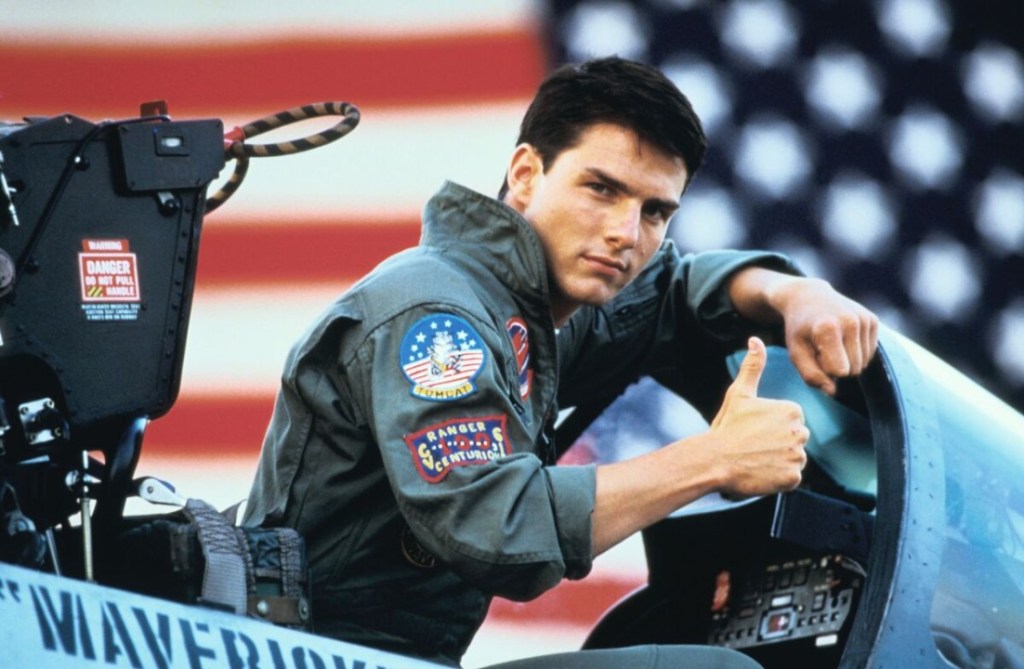
There’s a scene in the movie Top Gun where Tom Skerrit’s character Viper explains how learning works. Maverick, played by Tom Cruise, has (SpOiLeRs) seen his best friend and copilot die. Now he’s jittery and failing to function as a pilot. It looks like the end for him. He’ll never graduate Top Gun. He’ll never be the best of the best. Jester and Viper are his instructors.
Jester : He can’t get back in the saddle, won’t engage.
Viper : It’s only been a few days.
Jester : You know, he just might not make it back.
Viper : Keep sending him up.
Maverick has been through a traumatic experience. High levels of acute cortisol, a stress hormone, have altered the pathways of his brain. There’s a fear response to merely being in the cockpit of his jet. Viper knows that if this pathway is to be unlearned, Maverick needs to fly. And he needs to fly now. While the cortisol is still flooding his limbic system, his amygdala, the fear response area of the brain. Because once the pathway is established it’s much more difficult to unlearn. Maverick has to face his fear while the stress response is fresh.
But wait. Isn’t stress a bad thing?
It often feels bad. But it seems to be a necessary component of learning. We’ve known for centuries that it is necessary to get out of the comfort zone in order to learn optimally. Science is only now proving it. The brain is a dynamic organ. While learning has the most potent effect in early developmental windows, it can take place at any time in the lifespan. In 1949, Donald Hebb established a principle that seems to hold true for how neurons interact in the brain to facilitate this process. It’s usually summarised as “Neurons that fire together wire together”. When they do so consistently, they link up. We call this Long Term Potentiation. The reverse, when a skill is not used for a long time, is called Long Term Depression. This is where pathways desynchronize. I’ll bastardise Hebb’s theory further. The brain (and central nervous system) operate on a ‘use it or lose it’ basis. Once a pathway is established, a lack of use will see it begin to fade.
So why was it necessary for Maverick to get back in the air? Because the pathway was his skills as a pilot. What he needed to rewrite was the new fear response. Wait too long and the skills would fade. But there was always the risk that the stress response would only be compounded by a further reticence to, as Jester puts it, engage.
Let’s engage
There’s more to this. Viper knows that the stress response is important. Cortisol is necessary for learning. But what does that mean? It’s the reason why exams are stressful. That process of regular testing in exam conditions that we’re all so familiar with? A vital part of wiring your knowledge into your brain. But Viper is still worried about Maverick, and not just because he might crash his F14 and kill himself and (another) co-pilot. Too much cortisol instead has a disastrous effect on memory. It actually inhibits it.
What does this mean for us? Basically that we don’t learn much in the comfort zone. And we won’t remember much in a panic zone, attempting tasks that are way beyond our capabilities. Instead, we should aim for a learning zone right at the edge of our current skill level. The trouble is this will necessarily represent a moving target. And unlike Maverick, we can’t rely on missile lock to help.
The good news
There are some talents that are just beyond mere mortals. Take Mozart. Performing for royalty and composing symphonies at 7-years old. The child Mozart famously had perfect pitch. That is the ability to perfectly replicate a musical note without a reference tone. It’s a vanishingly rare ability that usually only shows up in truly gifted musicians.
And yet, recent science suggests it can be learned. Or at least, not forgotten. This study found that incidence of perfect pitch was 100-times more common among speakers of tonal languages, such as Mandarin Chinese. English is a phonetic language, as are all European languages. This suggests that perfect pitch is something that many of us are born with. Maybe all of us. But it’s quickly unlearned through Long Term Depression because we simply don’t need it when acquiring language. Unless we speak a tonal language, that is.
If this is true of perfect pitch, it’s likely that many other superhuman abilities can be gained and honed. With some, it might depend on very early training. With others – for example, UX design and strategy – it’s likely a muscle we can strengthen with deliberate practice.
Deliberate practice
The researcher Anders Ericsson, author of Peak: Secrets from the New Science of Expertise, cites deliberate practice as key to becoming an expert. And yet it’s something we’re all familiar with. When I was first learning to drive a car, I practised very deliberately. I had to concentrate to time the clutch pedal while simultaneously changing gear. I ran through the steps of checking my rear-view mirror, signalling and making a manoeuvre. Putting the car into neutral when I stopped. Activating the windscreen wipers. Selecting the correct lane at a roundabout. These were all things that required concentration and practice. I’ve been driving for more than 20 years now, and if I’m honest, I’m not a much better driver than I was a year after my test.
Why? Because I stopped needing to practice deliberately. Driving became something that I do almost unconsciously. Once the various techniques were ingrained I stopped needing to continue to learn. This is why you don’t meet elderly taxi drivers who are better drivers than Formula 1 rookies.
So why do we stop?
Because deliberate practice is exhausting. Even top performers in music, chess, and sports, can usually only manage about four or five hours a day maximum. Deliberate practice demands that we continue to hone our existing skills while simultaneously extending their reach and range. It requires concentration. If you’re a musician, you’re not merely plinking at the keys. You’re pushing yourself to the limit of your abilities. Continuing to deliberately practise a skill you have learned requires willpower, focus and a sincere desire to improve. The stress of doing this is likely where that drip of cortisol comes in.
What might this look like for UX designers? We could strive to constantly apply new learning to our existing skills. How might this design change now I’ve completed a course on hashtag#empathy ? How might listening to John Coltrane affect our planning process? What does the natural world have to teach us about symmetry? How about Plato’s theory of the forms?
Applied mindfulness, and forcing ourselves to think differently to apply our learning to our work, can only help us to find new ways of doing. It might be stressful to be constantly doing things differently. But science suggests it’s worth it. And it’s how we’ll continue to push boundaries.
But we can take naps!
Yang to the Yin of the brutal process of deliberate practice is sleep science. Evidence suggests that those who take a short nap after learning something are more likely to remember it. Mental representations can help too. These are mental models of the elements necessary to complete a task. What sets expert performers apart from ordinary Joes, says Ericsson, is the quality and complexity of these models. A complex model allows an expert to assess how she would apply her skills to a novel situation. When the novel situation happens, they can make faster, more accurate decisions. This helps them respond quickly and effectively.
Perhaps the result of these mental models is what we see when brilliant individuals suggest super-novel solutions. Like in Top Gun, when Maverick seems to have overcome his stress response:
Maverick: I’m bringing him in closer.
Merlin: You’re gonna do what?!
Maverick: I’m going hit the brakes and he’ll fly right by.
The real Top Gun
In Vietnam, US Navy pilots were regularly engaging Soviet-trained North Vietnamese pilots. And they were getting their asses handed to them. The Russian-made MiGs were holding their own against the Navy’s best planes. In the first five months of 1968, they lost 10 planes to nine Vietnamese fighters they brought down.
The Navy head honchos decided to establish a specialist dog-fighting school. They called it US Navy Strike Fighter Tactics Instructor Program. We know it as Top Gun.
The Navy’s best pilots were picked to be the instructors. They flew similar planes to the Vietnamese MiGs and used the same tactics. Instead of weapons, they carried cameras, to record every aerial engagement. The trainees were encouraged to push their planes right to the limit of failure, to learn exactly what they were capable of. They tried different tactics. And every time they landed, usually after a bruising beating by the instructors, they analysed their performance. “What did you feel up there?” “What were you thinking when you did this?” “What were your mistakes?”
These after-action reports allowed the trainees to reflect on their performance in its immediate aftermath. They got rapid feedback. They got better fast. Over time, best practices became internalised. They reacted without thinking. They felt comfortable pushing the planes to their limits. They started to see real improvements in their dog-fighting skills.
By the time they graduated, the pilots were among the most experienced dog-fighters in the world.
Between 1970 and 1973, the US Navy shot down 12.5 MiGs for every plane they lost. Their kills per engagement increased five-fold. Before Top Gun, the Vietnamese would lose a plane in about 20% of engagements. After Top Gun, they lost a plane in almost every skirmish. This is deliberate practice in action.
TLDR
- To learn we need to get out of our comfort zone. This will be stressful and that’s a good thing
- Reflecting on our performance and creating mental models for how we’d do better is vital in order to keep improving
- Taking a nap after learning something helps us to remember it
- Top Gun can only teach us so much. We have to push ourselves to do things differently, apply our knowledge and get better.

 1,001 behavioural insights
Leave a comment