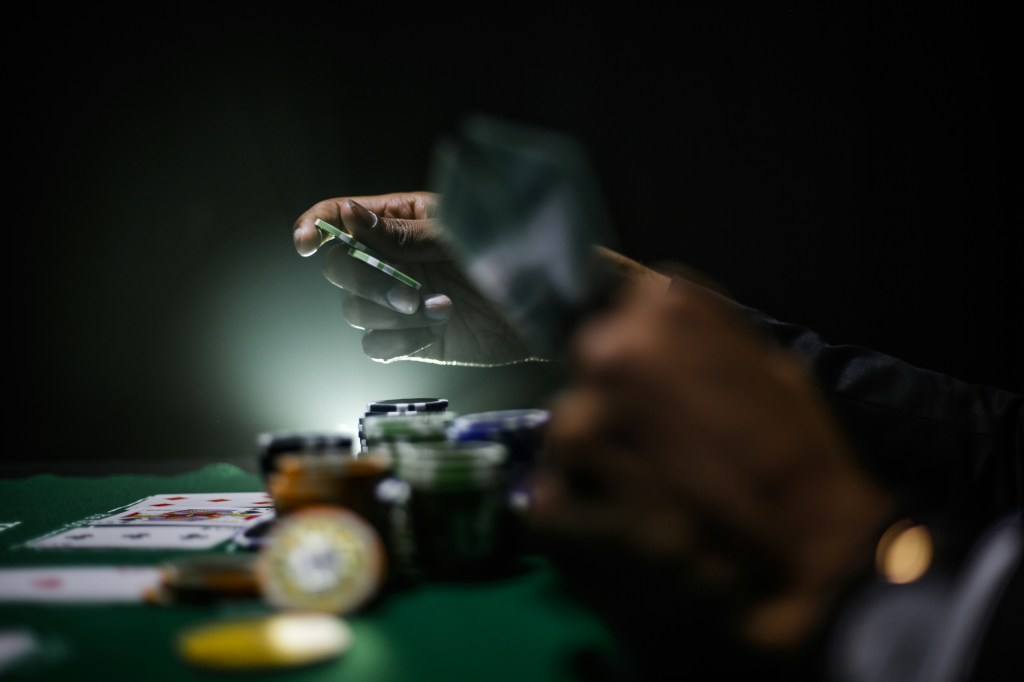
Just who is at risk from unsafe gambling? In 2011, a married 51 year-old father of two successfully sued Glaxo Smith Kline after he lost all his family savings and even ended up stealing to fund an online gambling habit. Worse, he’d also begun engaging in risky casual gay sex, which had led to him being raped.
What led this (until then) typical family man to have such an extreme change in behaviour? According to the court ruling, it was his prescription medication for Parkinson’s disease.
The case is extreme, but it could happen to any of us. As many as one in six people taking medication for Parkinson’s disease have reported changes in their attitude to risk. While we may not all develop Parkinson’s disease, the fact that this disease and its treatment involve a disregulation of the dopamine system can provide insights into how we all assess risk/reward and the role online platforms can play in keeping users safe.
Meds that affect dopamine affect gambling behaviour
Parkinson’s symptoms are caused by a degeneration of dopaminergic neurons in the substantia nigra pars compacta. Dopamine here helps regulate the nigrostriatal pathway in the brain, which is critical for motor function. The significant loss of dopamine in this system that characterises Parkinson’s presents as rigidity, tremors and bradykinesia (slow movement) in the patient.
We treat Parkinson’s with a drug generically named Levodopa or L-Dopa. L-Dopa increases the amount of dopamine available in the nigrostriatal pathway, reducing Parkinson’s symptoms.
But…
When people taking L-Dopa develop problematic gambling behaviour, it’s often due to the drug’s impact on our risk/reward system. Taking L-Dopa increases dopamine levels throughout the brain (continuing advances in the drug mostly involve improving the targeting here). Increases in dopamine in the mesolimbic system can affect behaviour. The mesolimbic system, which projects from the ventral tegmental area to the nucleus accumbens, forms a core component of our reward system. It’s not hard to see how a little dysregulation here might have a big effect, especially for someone who already enjoys gambling.
Overstimulation of dopaminergic neurons here enhances the perception of rewards and can alter risk/reward evaluation. This can make people more likely to engage in behaviours they perceive as rewarding, despite potential negative consequences.
These behaviours might include: pathological gambling, hypersexuality, compulsive shopping and binge eating, even to the point of an impulse control disorder. The tricky thing is, these people haven’t become mindless zero-impulse zombies. Just like most of us (cough, social media, cough) they’ll happily celebrate their wins and successes publicly while minimising losses. They might suddenly seem to have a new lease of life, especially having been suffering with Parkinson’s symptoms.
Thus these behaviours might seem to friends and family as positive, and be encouraged. It takes a good deal of self-reflection to realise our behaviours are problematic, especially when they feel good.
That’s why it’s so vital that people taking L-Dopa and other dopaminergic drugs are aware of the risks.
This is your gambling brain on cocaine
There are a lot of misconceptions regarding the role of dopamine in the brain. Dopamine isn’t a pleasure chemical. It’s an anticipation chemical. On a primal level, it’s the chemical that makes us say ‘what if…’. It’s a key component in the brain’s ability to learn. It’s driven our creativity as a species – what if I ride that horse? What if I cook this meat? But also our compulsions.
With dopamine, the grass is always greener on the other side. It’s dopamine that wants us to repeat the behaviours we enjoyed, whether the behaviour becomes problematic due to repetition or not (eg. drugs of abuse, alcohol, a Mick Jagger-style love life without the Mick Jagger bank account).
It’s dopamine that makes us ‘enjoy’ scrolling through Instagram, or swiping along rails of tiles in Netflix*. It’s dopamine that whispers ‘It could be you’ when we buy a lottery ticket or put a quid in a fruit machine.
Affecting dopamine levels affects our ability to weigh up risk versus reward. The entire science of odds-making is a dispassionate analysis of risk and reward. Which is why the house always wins, eventually.
Taking cocaine, cannabis, amphetamines, and drinking alcohol can all affect dopamine levels and thus risk reward predictions. In interviews, sports fans who avoid sports gambling often cite impulse control issues while under the influence of alcohol as a key reason why they don’t use online sports books. The difference is, we expect some level of change in judgement while under the effect of these drugs. With prescription medications, we may not attribute behaviour change to the drug.
The monster in your pocket
Another factor that hasn’t been around long enough to be well-studied is our access to the internet. It’s only over the last 10 or 15 years we’ve all had a weaponised dopamine-generating possibility-machine with us at all times: our smartphones.
Alterations to our risk/reward perception today present an increased risk that people even 15 years ago would not have experienced. In the context of my research, I’ve learned that my smartphone gives me access to gambling apps, pornography, dating apps and an abundance of places that make it very easy to impulsively buy products. It’s been quite a week.
Yet the Mayo Clinic still doesn’t list impulsive behaviour as a potential side effect of L-Dopa. Bearing in mind it was the drug producer who have faced legal action for the adverse effects of these drugs to date, do you think gambling companies should warn customers about the potential effect on their gambling behaviour of their prescription meds?
* A side note – when content providers create platforms for domestic users and for business owners, they often look quite different. Domestic users enjoy (as measured by time spent in-platform) the discovery aspect of being able to scroll through rails. Goal-focused business owners presenting content to their customers in betting shops or bars prefer everything on one page.

 1,001 behavioural insights
Leave a comment