Earlier this month, I talked about Walter Benjamin’s concept of the dialectical image and its importance for User Experience (UX) design. Let’s look at a specific example of a superficially simple product to illustrate how, with a mindful approach, we can ensure we’re conscious of all its layers of association.
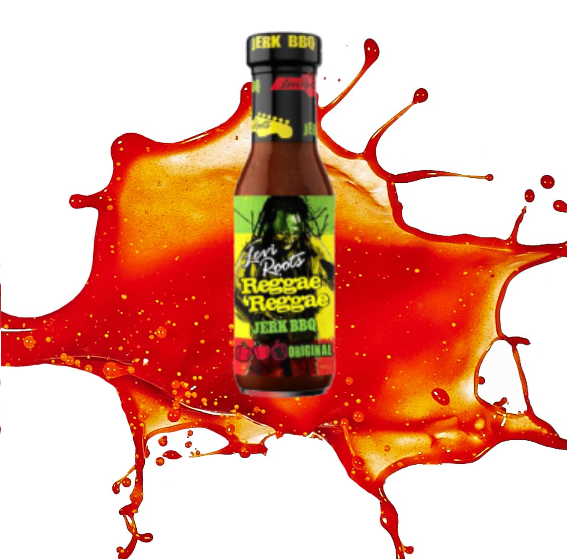
I’m a big fan of sauces and one of my favourites is Reggae Reggae Sauce. It was created by Levi Roots, a British-Jamaican entrepreneur and musician. It’s a Caribbean-style barbecue sauce, and I first heard about it when Roots pitched it on the UK television show Dragon’s Den. The full story of that TV appearance is here.
But Reggae Reggae Sauce is much more than just a great barbecue sauce with a memorable TV debut. Examining it through a dialectical image lens reveals its complex layers of meaning, historical context, and transformative potential.
Reggae Reggae Sauce, after all, is a fusion of ideas. It was created by someone who grew up in one culture then moved to another, picking up influences along the way. The sauce itself challenges the identity of conventional condiments. It does this through its distinctive blend of Caribbean flavours and cultural references, which mirror the immigrant experience. A kind of culinary culture clash, it disrupts the identity of traditional sauces, offering an alternative that reflects the non-identity aspect of dialectical images.
The sauce can be seen as a fragmented image that amalgamates various facets of Jamaican culture, music, cuisine, and entrepreneurship. These fragments converge to construct a multi-dimensional representation. It’s no wonder Roots came across as so authentic on Dragon’s Den. His sauce represented something like a historical image of his own lived experience. It acknowledges the material conditions that have shaped Jamaican food and music, transforming this lived experience into a marketable product. Thus, it establishes the dialectical image’s capacity to represent multiple viewpoints.
Analysing Reggae Reggae Sauce within its historical and cultural context reveals how it responds to and is influenced by broader societal trends, attitudes toward diversity, and shifts in consumer preferences.
In addition to this, Reggae Reggae Sauce connects with a range of historical experiences. Firstly, its Jamaican roots tie it to the island’s colonial history, shaped by European colonisation and the transatlantic slave trade. This dark history gave rise to a fusion of flavours from the African diaspora, as well as those of Europe, and indigenous influences in Caribbean cuisine.
Reggae Reggae Sauce thus can be seen as part of a larger movement that reclaims cultural identity and representation in post-colonial contexts. It challenges the dominance of Western culinary norms, asserting the value of Caribbean flavours. The sauce’s recipe and ingredients exemplify the fusion of culinary traditions, with elements like Scotch bonnet peppers having historical roots in Caribbean cooking.
The sauce’s continued popularity illustrates the effects of globalisation and the increasing interconnectedness of cultures. It shows how historical experiences and cultural elements can be shared and celebrated globally.
If you were designing the UX for some element of the Reggae Reggae Sauce brand, don’t you think it would be helpful to explore that kind of analysis, before you begin designing and user testing?
Intuitively we’re aware of many of the associations.
But exploring them deeply and mindfully provides a better platform for understanding the potentialities of the brand.
The sauce, the brand and the man (they’re kind of inseparable) serve as a fascinating dialectical image that encapsulates a myriad of historical experiences relating to identity. By understanding the concept of the dialectical image, we can better understand these forces, and help weave together these ‘ways of seeing’ Reggae Reggae Sauce.
The more deeply we experience this culturally rich and flavoursome product, the better we’d be positioned to support and promote the brand so it resonates with people from diverse backgrounds. Other brands present less striking examples, but the dialectical approach still represents a starting point way beyond most competitors.

 1,001 behavioural insights
Leave a comment