In 1983, John Schnatter started making and selling pizza in his dad’s tavern in Indiana. Within seven years, he’d sold 100 franchises. Today, the company he founded – Papa John’s – is a global corporate leviathan. Schnatter was able to disrupt an industry with established major players. And he did it because of our brain’s reward prediction error system.
Papa John’s sold on a promise of ‘better ingredients’. But the real disruption came in the pizza box. When you ordered Papa John’s for the first time, you were pleasantly surprised to find that your pizza came with a dipping sauce included (as well as some pickled jalapenos).
Learning from experience
This is an example of reward prediction error (RPE), a concept in neuroscience that describes the difference between expected and actual rewards. If you haven’t heard of it before, that might be because it’s still not completely understood. RPE is particularly significant in understanding how the brain’s dopamine system influences learning and behaviour. Dopamine neurons in the brain play a crucial role in signalling these prediction errors, which in turn guide future behaviour by adjusting expectations and learning from experiences.
Five Guys is another fast food chain that saw explosive growth in the last decade. Five Guys went further and actually included three RPE triggers. While you’re waiting in line, help yourself to free peanuts. Order a small fries and discover that the server has absolutely loaded your bag with fries. And the ability to add a unlimited number of toppings for one price.
If the fast food industry is overwhelming associated with RPE triggers, there’s a reason for that. Fast food tends to be low cost and the benefits are tangible and shareable. Eg. Not ‘I went to this restaurant and the server was nice.’ Rather, ‘I bought X and was surprised to get Y and Z included.’ This is great for delivering a positive first experience and word of mouth about the product. Because tangible unexpected rewards make an experience memorable, and one we want to talk about.
It’s all your brain’s fault
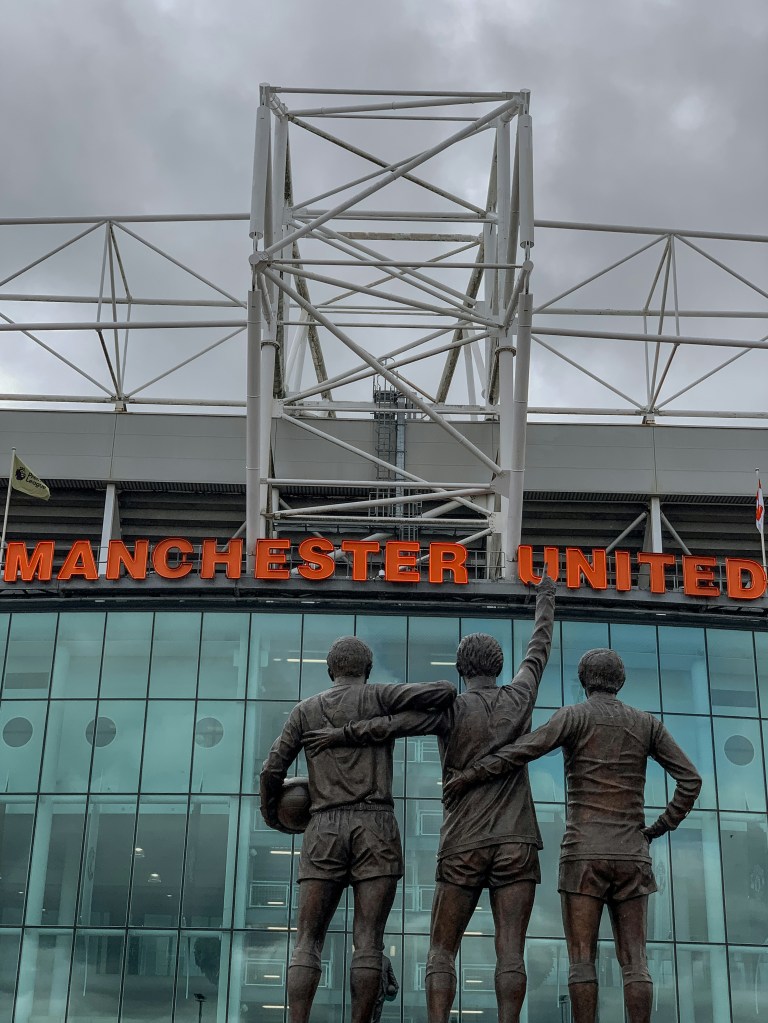
It’s why so many people can trace the moment they fell in love with their favourite sports team to an unexpected moment. For me, it was the 1985 FA Cup Final. I was very little at the time, but was nominally a Manchester United fan because my grandad was one. I remember the week before the match being certain that we had no chance of winning.
Everton had already won the league. As I remember it, they even appeared on Blue Peter (I think to sing their FA Cup song, which used to be a thing,) although I can find no record of that anywhere so I probably imagined it. But that just serves to illustrate the point: Everton got into my head. They were the best.
And then we won (in extra time!). Something snapped into place. I was a fan forever.
So what actually happened in my tiny youthful brain?
It’s (fairly) common knowledge that the dopamine reward system, primarily located in the midbrain areas such as the ventral tegmental area (VTA) and the substantia nigra, releases dopamine in response to rewarding stimuli. When an unexpected reward is received (Manchester United beating the champions in extra time), dopamine levels increase, reinforcing the behaviour that led to the reward (watching Manchester United more to ‘chase that high’). Conversely, when a predicted reward fails to materialise, dopamine levels drop, signalling a negative prediction error. This dynamic helps the brain adjust predictions and modify behaviour to optimise future rewards.
This aligns with Skinner’s famous operant conditioning studies, which shows that even simple animals will repeat behaviours that result in reward and stop doing ones that have negative outcomes. The latest research into RPE seems to go further though. It suggests that these positive and negative signals are coded asymmetrically. The positive signals are encoded more robustly, so they have more staying power. Which is science-speak for why I’m still a Manchester United fan, despite the years 1986 to 1991 being pretty bleak. In fact, my memories of that time are actually pretty good. Another FA Cup! The European Cup Winners Cup! Thanks asymmetric RPE coding!1
This probably explains (to some extent) the success of the gambling industry. Gambling capitalises on the principles of RPE to keep players engaged. Slot machines and other forms of gambling provide intermittent rewards, creating a variable schedule of reinforcement. This unpredictability leads to high levels of dopamine release when wins occur, reinforcing the gambling behaviour despite frequent losses. The unexpected nature of the rewards generates positive prediction errors, which are highly reinforcing and can lead to persistent gambling behaviour.
The presence of dopamine is key. In their book The Molecule of More, Daniel Z. Lieberman and Michael E. Long stress that dopamine is not just about pleasure, but about the anticipation and pursuit of pleasure. This anticipation is driven by the prediction errors that occur when actual rewards differ from expected rewards. In gambling, the dopamine system is continuously activated by the possibility of a big win, keeping players engaged.
Dopamine is key to the brain wiring-in learning. So the fact that the big dopamine releases happen with the infrequent wins encodes the behaviour, while our prefrontal cortex searches for any patterns that might help us increase the frequency. If you want to get technical (you probably don’t) the dopamine release is non-linear and heterogeneous, meaning, respectively, that inputs and outputs are not the same, and the properties change within the system.
It’s also why we don’t all switch to being Real Madrid fans – we wired in the ‘best’ hit of dopamine long ago, when we first saw our team overcome adversity to triumph.
What about you? Do you have any memories about times when an unexpected good outcome led to a lifelong relationship (sports, food, gaming or gambling)?
- Note: it really does seem to be the unexpected element that drives coding here. In the late 2000s, I worked with an American guy and we had a kind of ‘sports cultural exchange’ where we’d go watch each others’ teams. This was the era of Alex Ferguson’s second great Champions League winning side, the 2008 vintage. Did my buddy become a Manchester United fan, despite all those trophies? He did not. As a newbie to the Premier league, he was astonished to learn there was a team from a traditionally Jewish area. Yes, I accidentally helped the poor guy (Jewish himself) become a Tottenham Hotspur fan. He doesn’t hold it against me. ↩︎


 1,001 behavioural insights
Leave a reply to What we can learn from Star Wars and IKEA when creating user journies – 1,001 behavioural insights Cancel reply